I don’t know about you, but whenever I have some free time, I end up in the same cycle: I decide I want to start a new hobby, spend way too long researching how much it’ll cost, get overwhelmed by all the supplies, and then somehow end up doom scrolling instead.
Eventually, I realized that starting a new hobby doesn’t have to cost a fortune. Once I started looking into affordable options, I found plenty of hobbies you can start for anywhere from $0 to $50, and many of them require little to no equipment.
So I decided to put together a list of 31 affordable hobbies for women that are fun, beginner-friendly, and budget-friendly. Whether you’re looking to be more creative, spend less time on your phone, get outside, or simply try something new, there’s something here for everyone. I made sure to include a variety of hobbies for different personalities, interests, and lifestyles, so hopefully you’ll find one that’s the perfect fit!
1. Reading
Estimated cost to start: $0-$20
Reading is one of the easiest and most affordable hobbies to start, and it’s a great way to relax after a busy day. Whether you enjoy getting lost in a fictional world, learning a new skill, or reading personal development books, there’s something out there for everyone. It’s also a simple way to reduce screen time and unwind before bed.
Here’s a couple ways you can enjoy reading on a budget:
- Borrow books from your local library
- Download free or discounted ebooks
- Swap books with your friends (Great way to include your best friends in your hobby!)
- Shop for second-hand books at thrift stores and used bookstores (You can search online to find some of these in your area)
If you still prefer buying new books, you might be surprised to learn you can get a lot of paperbacks that are available for under $20.
Reading has become one of my favorite hobbies, especially when I want to unwind. My favorite genre is fiction because I love getting immersed in a good story and forgetting about everything else for a while.
A while ago, my family started a little reading group where we each find books for cheap, usually from thrift stores, used bookstores, or library sales, and then get together once a week to talk about what we’ve been reading. It’s become something I genuinely look forward to every week, and it’s proof that reading can be both an affordable hobby and a fun way to spend time with the people you care about.
2. Walking
Estimated cost to start: $0
Walking is one of the simplest hobbies to start because you can do it almost anywhere and you literally don’t need any equipment. If you’re anything like me and need a minute to give yourself time to clear your mind and step away from screens, then this hobby is a great choice.
Walking doesn’t have to feel boring either. You can listen to your favorite music, catch up on podcasts, listen to audiobooks, or simply enjoy some quiet time without distractions. Some people even turn walking into a daily routine by exploring different neighborhoods, parks, or trails and discovering new places nearby.
Tip: Set a small goal, like a 10-minute walk after lunch or a 20-minute short evening walk instead of trying to build a big routine right away.
The best part is that walking is completely free. All you really need is a pair of shoes, and you can start right away. If your budget lets you, when I started a invested in things like a good water bottle and some headphones which I’ve used nearly every day since then so I don’t regret getting them at all.
Walking has become one of my favorite ways to slow down and clear my mind. I usually spend around 45 minutes walking every day, and I love using that time to listen to calming music or catch up on podcasts. It gives me a chance to step away from my phone, get some fresh air, and have a little time to myself.
3. Journaling
Estimated cost to start: $0-$20
I feel like starting to journal is one of those things that we’ve all thought about but never really got around to doing, so this is definitely your sign to actually start this time. Journaling is a really popular hobby and honestly, I can see why. It’s such a simple and affordable hobby that allows you to slow down, reflect and get your thoughts out of your head and onto actual paper.
The only things you need to start? A basic pen and paper.
There are so many different ways to journal which makes it even more great. It all depends on what works best for you. Gratitude journaling is a great option where you write down a few things that you’re grateful for each day even when your life gets stressful.
Another option is daily reflection, where you take a few minutes to write about your day, how you’re feeling, what went well, and what you want to improve.
Here are some more options (summarized for easy reading):
- Morning journaling (starting your day by writing intentions or thoughts: “Today I want to focus on being patient and productive.”)
- Evening journaling (reflecting before bed: “My favorite moment today was…”)
- Manifestation journaling (visualizing future goals: “I picture myself feeling confident in my new job.”)
- Affirmation journaling (writing positive statements: “I am capable of handling challenges.”)
- Confidence journaling (recording achievements and strengths: “Something I did well today was…”)
You get the point, you can journal about almost anything you want!
Tip: Don’t pressure yourself to write pages every day. Start with just a few sentences or a simple prompt like “What is one thing I’m grateful for today?” Building a small habit is much easier than trying to create a perfect journaling routine overnight.
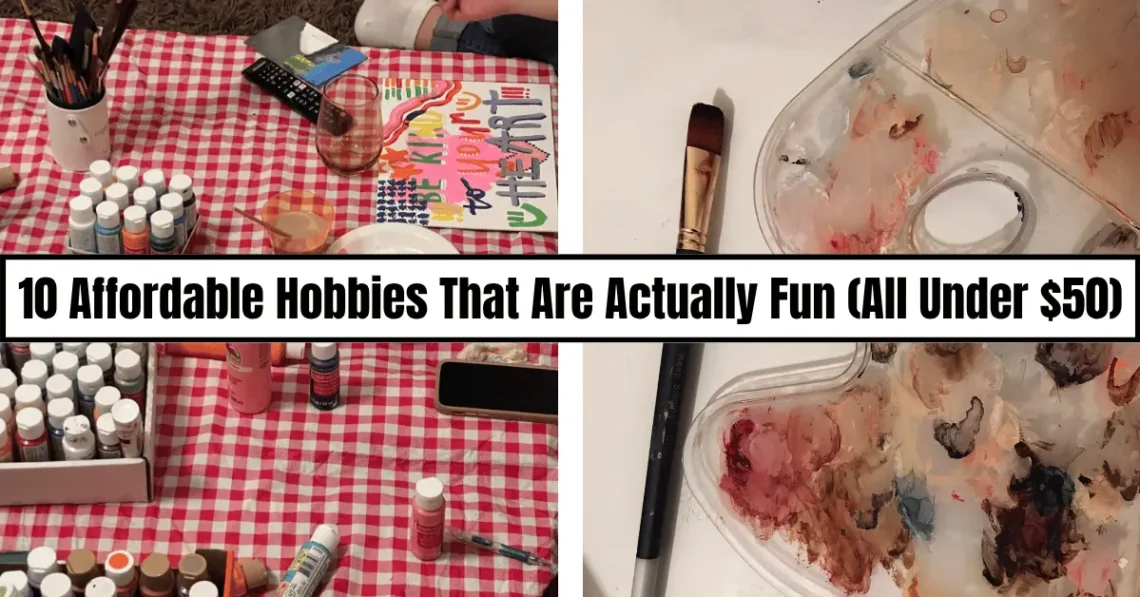
4. Watercolor Painting
Estimated cost to start: $20-$50
A lot of people think that because they’re not good at painting or art that they wouldn’t find this hobby enjoyable but you would be surprised because watercolor painting creative hobby that is much easier to start than many people think.
The reality is that you don’t need to be naturally artistic or have years of experience to be able to enjoy painting. Part of the fun is simply experimenting, learning new techniques, and creating something with your own hands.
To get started, you only need a few basic supplies: a beginner watercolor paint set, some watercolor paper, and a few brushes. You can find affordable starter kits online or at craft stores, and you don’t need to buy expensive professional supplies right away. As you improve, you can slowly upgrade your materials if you want to.
One of the best things about watercolor painting is that there are so many free resources available online. YouTube has countless beginner-friendly tutorials that teach everything from basic brush techniques to painting flowers, landscapes, and simple illustrations. You can follow along step-by-step or use videos as inspiration to create your own designs.
Tip: Start with small projects instead of trying to paint a huge masterpiece right away. A small postcard-sized painting is less intimidating and helps you practice without feeling pressured to create something “perfect.”
I tried watercolor painting a while ago, and while I enjoyed the experience of learning something new, I realized it wasn’t the hobby that fit my personality best. I naturally gravitate more toward hobbies like writing and reading, so watercolor painting didn’t become something I spent a lot of my free time doing.
At the same time, I have friends and family members who absolutely love watercolor painting, which just goes to show that the perfect hobby really depends on the person.
5. Crocheting
Estimated cost to start: $15–$40
Many people assume crocheting is difficult because finished projects can look complicated, but it is actually one of the most beginner-friendly creative hobbies to try. Once you learn a few basic stitches, you can start making simple projects without needing expensive tools or years of experience.
Crocheting is a great hobby for anyone who enjoys creating things with their hands while also having something relaxing to do. The repetitive motion of looping yarn and repeating stitches can feel calming, almost like a form of meditation. Many people enjoy crocheting while listening to music, watching a show, or relaxing at the end of a busy day.
One of the best parts about crocheting is that you can start with very affordable supplies. A beginner only needs a crochet hook, some yarn, and a little patience. You can find inexpensive yarn at craft stores or online, and there is no need to buy premium materials when you are first learning. A basic starter setup can usually cost less than $20 if you choose simple supplies.
For your first project, it is best to start with something small rather than jumping into a complicated blanket or sweater. Beginner-friendly projects include simple scarves, dishcloths, coasters, or small crochet flowers. These projects help you practice basic stitches while still giving you something useful or decorative at the end.
Tip: Don’t worry if your first few rows look uneven. Most beginners struggle with keeping consistent tension at first, but your stitches naturally improve the more you practice.
When I tried crocheting for the first time, it was because I wanted a relaxing hobby that let me create something I would love. My first project was making a dishcloth and it definitely didn’t turn out the way that I thought it would in my head, but even then I realized that although it wasn’t perfect that it was something that I created myself and it was really cool to see how you can turn a ball of yarn into a finished product.
6. Baking
Estimated cost to start: $15–$40
If you enjoy spending time in the kitchen, baking can be one of the most rewarding and affordable hobbies to pick up. While some recipes require specialty equipment, many beginner-friendly baked goods can be made with basic kitchen tools and inexpensive pantry staples you may already have at home.
One of the best things about baking is that there is always something new to learn. You can start with simple recipes like cookies, muffins, or banana bread before moving on to homemade bread, cakes, pies, or pastries as your confidence grows. Every recipe teaches a new technique, whether it’s measuring ingredients accurately, kneading dough, or decorating desserts.
Getting started doesn’t have to be expensive. Most beginner recipes use affordable ingredients like flour, sugar, butter, eggs, baking powder, and vanilla extract. Buying these pantry staples in larger quantities can save money over time, and you’ll be able to make several different recipes without constantly shopping for new ingredients.
Tip: Read the entire recipe before you begin and measure all of your ingredients first. Having everything prepared ahead of time makes the baking process much smoother and helps prevent common mistakes.
One of my favorite things to bake is classic chocolate chip cookies. They’re simple enough that I don’t have to spend hours in the kitchen, and they always turn out to be a hit with family and friends. I love experimenting with little changes, like adding extra chocolate chips or a sprinkle of sea salt on top. There’s something satisfying about pulling a warm batch out of the oven and enjoying one while it’s still fresh.
Of course, not every baking attempt goes according to plan. One of my biggest baking fails happened when I accidentally used baking soda instead of baking powder in a batch of muffins. They barely rose and had a strange, salty taste that made them impossible to eat. It was disappointing at the time, but it taught me to double-check my ingredients before mixing everything together. Since then, I’ve made far fewer baking mistakes, and it’s become a funny story to look back on.
7. Hiking
Estimated cost to start: $0-$50
If you’re looking for a hobby that gets you outdoors without costing much money, hiking is a fantastic option. Whether you enjoy quiet walks through the woods, scenic overlooks, or peaceful lakeside trails, hiking gives you the chance to disconnect from screens and spend time in nature.
One of the biggest benefits of hiking is that it’s also great exercise. Walking on uneven trails works different muscles than walking on a sidewalk, and even an easy hike can improve your endurance, balance, and overall fitness. The best part is that you can choose a trail that matches your experience level, from short beginner-friendly walks to more challenging day hikes.
There are plenty of apps and websites that can help you discover nearby trails, read reviews, and check the difficulty level before heading out. Starting with shorter, well-marked trails is a great way to build confidence while learning what kind of hikes you enjoy most.
Tip: Always check the weather forecast before heading out, let someone know where you’re going, and bring more water than you think you’ll need.
One of my favorite hikes has been a local trail with beautiful forest views and a small lake at the end. It wasn’t the longest or most difficult hike, but it was peaceful, and reaching the water made the walk feel especially rewarding. Moments like that remind me why I enjoy spending time outdoors.
Whenever I go hiking, I like to keep my backpack simple. Here’s a couple things I recommend that you bring:
- Reusable water bottle
- Granola Bars
- Sunscreen
- Phone
- Lightweight jacket
Whether you want a new way to stay active, enjoy fresh air, or simply explore places close to home, hiking is an affordable hobby that offers both physical and mental benefits.
8. Photography
Estimated cost to start: $0-$30
Photography is a creative hobby that allows you to capture everyday moments and see the world from a different perspective. While many people think they need an expensive camera to get started, the truth is that most modern smartphones have excellent cameras that are more than capable of taking beautiful photos.
One of the best things about photography is that there’s always something new to learn. You can practice taking pictures of landscapes, flowers, pets, architecture, food, or even everyday objects around your home. As you gain experience, you’ll naturally start paying more attention to lighting, angles, and composition, which can make a huge difference in the quality of your photos.
One of the most valuable photography skills is learning composition. Techniques like the rule of thirds, leading lines, and framing your subject can make even simple photos look more interesting. The more you practice, the easier it becomes to notice great photo opportunities wherever you go.
Tip: Instead of taking just one photo, try capturing the same subject from several different angles. You’ll often discover that a small change in perspective creates a much better picture.
My favorite things to photograph are sunsets, nature, and interesting places I visit. I enjoy how every sunset looks a little different, and taking photos helps me appreciate details I might have otherwise overlooked. Even when I’m simply out for a walk, I often find myself stopping to capture colorful flowers, unique buildings, or beautiful scenery.
9. Gardening
Estimated cost to start: $10-$50
Gardening is a rewarding hobby that allows you to spend time caring for plants while creating a more beautiful living space. Whether you have a large backyard, a small balcony, or just a sunny windowsill, there are plenty of ways to start gardening without spending a lot of money.
You don’t need a large outdoor space to enjoy this hobby. Many beginners start with indoor plants because they’re easy to care for and can brighten up any room. If you’d rather grow something you can use in your cooking, herbs like basil, mint, parsley, and chives are excellent choices. Even a small balcony can become a productive garden with a few pots or hanging planters.
One of the reasons gardening is so affordable is that you can start small and expand over time. Instead of buying dozens of plants at once, begin with a few inexpensive varieties and learn how to care for them before adding more to your collection.
Here are a few budget-friendly ways to get started:
- Buy seeds instead of mature plants.
- Reuse containers like buckets or old flower pots.
- Grow herbs from cuttings or divide plants from friends and family.
- Shop for gardening supplies during seasonal sales.
- Start with just two or three plants until you gain confidence.
As your plants grow, you’ll learn more about watering schedules, sunlight requirements, and the best ways to keep them healthy. Gardening also teaches patience, since many plants take time before you see noticeable results.
Tip: Before buying a plant, check how much sunlight your home or balcony receives. Choosing plants that match your space makes them much easier to care for.
Whether you’re growing herbs in your kitchen, caring for indoor plants, or creating a small balcony garden, gardening is an affordable hobby that offers a relaxing break from everyday life while helping you develop a new skill.
10. DIY Home Decor
Estimated cost to start: $10-$50
If you enjoy decorating your home and getting creative, DIY home decor is a fun hobby that lets you personalize your space without spending a fortune. Instead of buying expensive decorations from home stores, you can create unique pieces that reflect your personal style while staying within your budget.
One of the easiest ways to get started is by shopping at dollar stores. You can find picture frames, candles, glass jars, faux flowers, baskets, and seasonal decorations that can be transformed with a little paint, ribbon, or creativity. Small projects like creating a decorative centerpiece or customizing a picture frame are perfect for beginners.
Another affordable option is trying thrift flips. Visit your local thrift store and look for items like wooden trays, mirrors, vases, or small pieces of furniture that have good potential. With a fresh coat of paint, new hardware, or a little sanding, you can completely change the look of an item for a fraction of the cost of buying something brand new.
Tip: Before buying supplies, see what you already have at home. Old jars, leftover fabric, paint, ribbon, and wooden pieces can often be repurposed into beautiful decor without spending any extra money.
Final Thoughts
Finding a hobby you genuinely enjoy doesn’t have to be expensive. As you’ve seen, there are plenty of fun and affordable hobbies you can start for less than $50, whether you’re looking to be more creative, spend time outdoors, learn a new skill, or simply relax after a busy day.
Start with one idea that caught your attention, keep your budget in mind, and remember that you don’t have to be an expert to have fun. You might be surprised by how much joy a simple, low-cost hobby can add to your everyday life.